What Qualifications Should Carers Have?

Whether you're considering a career in care or looking for a carer for a loved one, understanding what qualifications carers should have is an important place to start. Read our helpful guide below to find out what formal training exists, what it means in practice, and why the right personal qualities matter just as much as the letters after someone's name.

Image

Choosing the right carer raises an important question: what qualifications should they actually have? The honest answer is more nuanced than you might expect. Formal training adds real value and gives you evidence of practical competence, but the best carers are defined as much by their personal qualities as by certificates. Compassion, patience, reliability and genuine warmth cannot be taught in a classroom, and for many people in need of care, these qualities matter most of all.

That said, there is a well-established framework of qualifications in the UK that equips carers with the skills and knowledge they need to provide safe, high-quality support. Understanding this framework helps both prospective carers and families seeking care to make better, more confident decisions.

Consultus carers conducting training together

Do carers need formal qualifications?

There is no single mandatory qualification required to work as a carer in the UK. Many excellent and deeply compassionate carers have entered the profession without formal training, building their skills through hands-on experience instead. Qualifications do, however, provide important evidence of both knowledge and practical competency. In live-in care especially, where a carer is entrusted with someone's safety and wellbeing around the clock, the combination of the right personal qualities and solid training is what you should be looking for.

When looking for a live-in carer, it is worth asking about their qualifications, training and relevant experience. A carer who has invested in their professional development will usually bring greater confidence and skill to their role.

The Care Certificate

For anyone new to care work, the Care Certificate is the recognised starting point. Introduced in 2015, it sets out 15 standards that all new care workers are expected to meet before working unsupervised. These standards cover areas including safeguarding, duty of care, equality and inclusion, privacy and dignity, health and safety, basic life support, and more.

The Care Certificate is not a formal qualification in the same way as a diploma, but it is widely recognised across the care sector as evidence that a new carer has met the required baseline standards. At Consultus Care, every new carer is supported through this foundational stage as part of their wider induction.

Consultus carers laughing together

Level 1, 2 and 3 qualifications in Health and Social Care

Beyond the Care Certificate, there is a clear progression pathway of formal qualifications available to carers.

Level 1 qualifications are introductory courses covering the fundamental principles of care: health and safety, safeguarding, duty of care, and equality, diversity and inclusion. Roughly equivalent to GCSE grades D-G, they provide a solid grounding for someone new to the sector but do not on their own demonstrate practical care competence.

Level 2 and 3 qualifications build significantly on these foundations. They require a much greater time commitment and incorporate practical, work-based assessment alongside theoretical learning. A Level 2 Diploma in Health and Social Care typically requires around 460 hours of study and is generally undertaken by someone already working in care who wants formal recognition of their skills. Level 3 rises to around 580 hours.

At Level 3, carers can begin to specialise, choosing from optional units that might include dementia care, domiciliary care, learning disability services or end-of-life care. Mandatory units at this level typically cover duty of care, person-centred approaches, safeguarding, and health and safety in care settings.

These diplomas (or their NVQ equivalents, for those who trained before 2010) are the core qualifications for professional care workers. It is recommended that all care staff hold at least a Level 2 or 3 Diploma in Health and Social Care.

Specialist training and continuing development

A carer's learning does not stop once they have completed their diploma. The needs of clients are varied and complex, and specialist training allows carers to develop deeper expertise in specific conditions and care contexts. This is particularly valuable in live-in care, where carers often support clients with complex health conditions on a one-to-one basis every day.

Relevant specialist areas include:

  • Dementia care, where carers learn communication techniques and approaches that reduce distress and support independence

  • Parkinson's care, covering symptom management and adapting support as the condition changes

  • Stroke recovery, including rehabilitation support and recognising warning signs

  • Palliative and end-of-life care, which focuses on providing dignified, compassionate care during the final stages of life.

  • Training in manual handling, medication administration and diabetes care is also common.

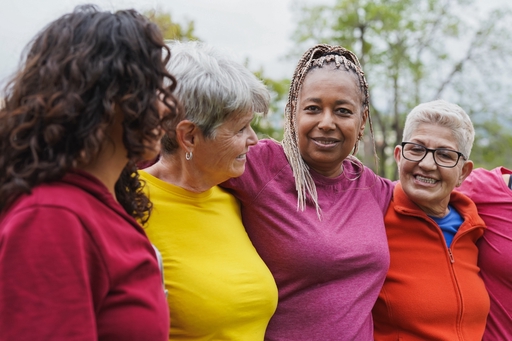
Carers linking arms

At Consultus Care, our carer training is endorsed by Skills for Care, the leading workforce development body for adult social care in England. Every new carer begins with a comprehensive induction at our training centre of excellence before starting their first placement, and we offer ongoing professional development throughout their career with us, including the opportunity to work towards a nationally recognised Diploma in Health and Social Care at Levels 2 and 3.

Nursing qualifications

For clients with highly complex or clinical care needs, a nursing qualification may be the right fit. Registered Nurses are qualified through a degree-level programme and registered with the Nursing and Midwifery Council (NMC). Their training equips them to manage care needs that go beyond what a standard home carer can provide, including tracheostomy care, ventilation monitoring, tube feeding, stoma and catheter care, and the management of complex medical conditions.

If your loved one has degenerative neurological conditions, requires post-surgical care, or has a combination of complex clinical needs, a live-in nurse may be more appropriate than a standard live-in carer. Consultus Care provides both live-in care and live-in nursing services, and our experienced team can advise on which is right for your situation.

What personal qualities should a carer have?

Alongside formal qualifications, the best carers bring personal qualities that no certificate can capture. When you are inviting someone into your loved one's home and entrusting them with their daily care, these qualities matter enormously.

Compassion and empathy sit at the heart of good care. Patience is essential, particularly when supporting someone with dementia or another condition that can make communication and daily tasks more challenging. Good carers are reliable, discreet and professional, and they communicate well: listening carefully, explaining clearly and building relationships founded on genuine trust. Strong observational skills are also important, as noticing small changes in a client's condition can make a significant difference to their safety and wellbeing.

At Consultus Care, we look for all of these qualities when recruiting our carers. We believe that the right person, backed by excellent training and ongoing support, is what truly makes the difference.

Consultus carer with a client in their kitchen

What to look for when choosing a carer

When arranging live-in care for a loved one, it is worth asking whether the carer holds a Level 2 or 3 Diploma in Health and Social Care or is working towards one, whether they have completed the Care Certificate, and whether they have specific training relevant to your loved one's condition. It is also worth asking whether the agency or provider behind them offers ongoing training, support and oversight, and taking time to think about what their experience and personal qualities tell you about whether they are right for your family.

When you choose a carer through Consultus Care, every carer we place has been carefully selected, fully trained to our award-winning standards, and is supported by our team 24 hours a day. We match carers to clients based on skills and qualifications, but also on personality and compatibility, because the relationship between carer and client is just as important as anything else.

To find out more about our live-in care services or to discuss what level of care is right for your loved one, call us on 01732 496715 or visit our live-in care page.

If you are considering a career in care and want to find out more about training and development opportunities at Consultus Care, visit our live-in care jobs page.

Image
Image

Content authored by Claire Sadler

Marketing Co-ordinator

Claire joined Consultus in December 2024, bringing four years of marketing expertise in brand development, content creation, and communications. A Media Practice BA (Hons) graduate from the University of Sussex, Claire develops engaging digital content and print assets to enhance Consultus Care's communications.